Quick verdict
For a trash can under a sink cabinet, the key measurement is not only the bin's width. The can must pass the cabinet opening, clear the hinges, sit below the sink bowl and plumbing, and leave enough room for the door to close and the bag to come out.
A short open-top bin is the safest starting point when the cabinet has a low sink bowl or a tight door. A step can is convenient only if the pedal and lid can operate without the door acting as a stop. If the cabinet is deep but awkward to reach, a low pull-out basket can be easier than a tall lidded can.
Measure this before buying
- Clear cabinet opening: measure between the door edges or face-frame stiles with the doors open. Use the narrowest width, not the nominal cabinet size.
- Hinge and door thickness: note how far the hinges project into the cabinet and how much of the opening the door occupies while it swings. A bin that fits through the opening may not fit behind the open hinge.
- Usable floor area: measure around the P-trap, shutoff valves, disposal, water lines, shelf supports, and cabinet base. Keep the can away from anything that could snag the bag or block service access.
- Height to the lowest obstruction: measure from the cabinet floor to the sink bowl, drain, disposal, or brace. Leave room for the lid, liner rim, and the hand clearance needed to lift a full bag.
- Door and lid movement: open the cabinet door fully and trace the lid, pedal, sensor zone, or handle. A swing lid needs air above it; a step pedal needs space in front of the can.
- Bag-removal path: measure the vertical and diagonal route from the bin to the doorway. You may need to tilt a full liner around the sink bowl or hinge before it can come out.
- Adjacent door clearance: check the neighboring cabinet or drawer. Two doors can collide when the under-sink doors are open, even if the bin itself stays inside its cabinet.
Recommended Amazon products to check
These examples cover compact step cans, a sensor can, an open-top micro-bin, and a low pull-out basket that can work when a tall can conflicts with the sink. Re-check the selected variant and listed dimensions on Amazon before checkout.

simplehuman 10 Liter Slim Profile Step Can best narrow step can
- Listed size: about 14.2 in. L x 6.6 in. W x 13.3 in. H.
- Why it fits: the narrow rectangular body targets a small cabinet opening.
- Watch: the pedal needs front clearance and the lid needs space above the bin; measure both with the door open.
Choose this shape when width is the limiting measurement and the cabinet has enough height for a lid and enough room to operate the pedal without the door blocking your foot.
View on Amazon
EKO 10L Small Step Trash Can best stainless compact option
- Listed size: about 13.8 in. L x 6.6 in. W x 13.9 in. H.
- Why it fits: the narrow body and removable inner bucket suit a small secondary trash zone.
- Watch: the inner bucket and full bag still need a diagonal removal path around the sink plumbing.
This is a useful comparison when you want a compact metal can. Confirm that the cabinet door can open wide enough to reach the liner and that the sink bowl does not limit the lid angle.
View on Amazon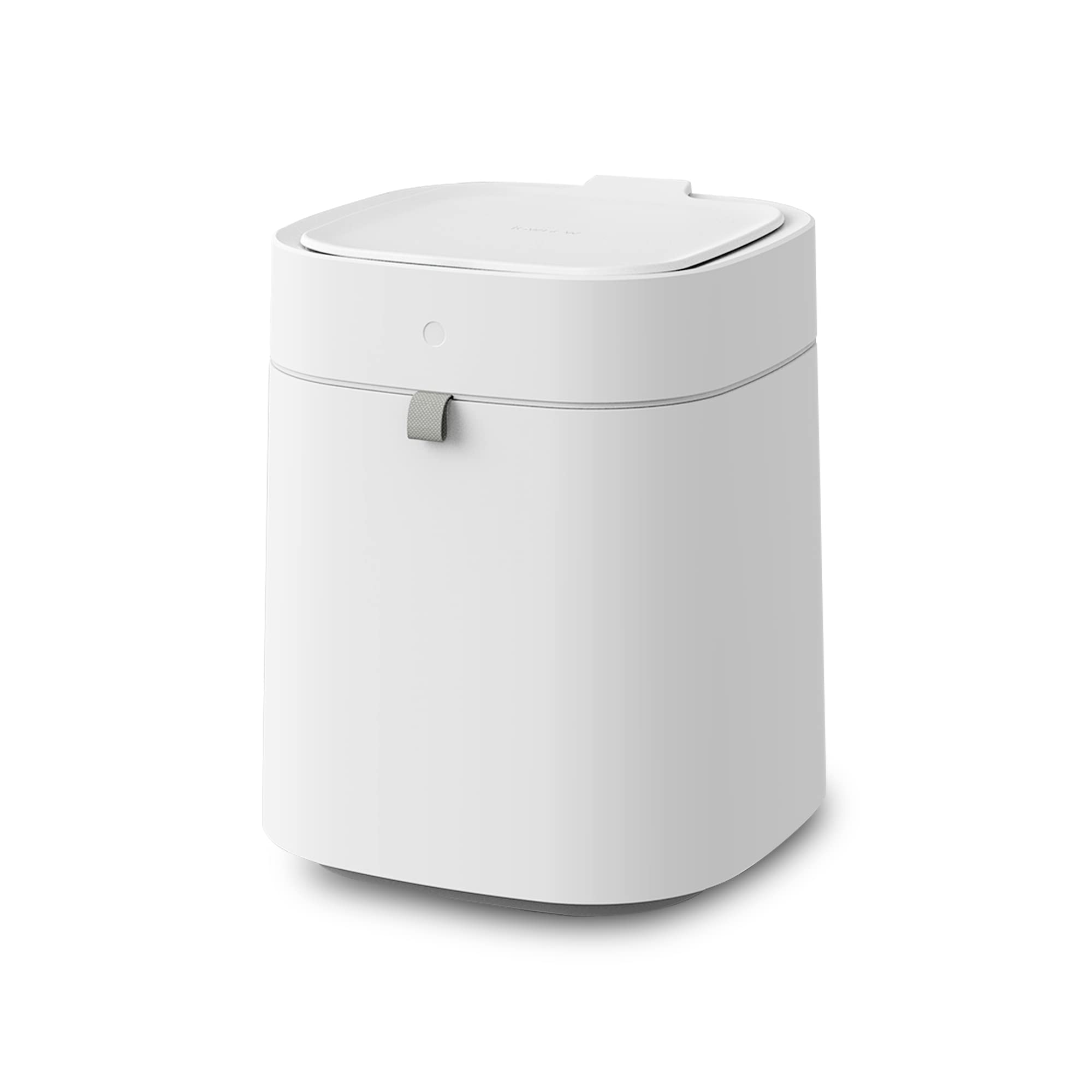
TOWNEW T Air X Small Smart Trash Can best when width is near 9 inches
- Listed size: about 13 in. L x 9 in. W x 13 in. H.
- Why it fits: the compact rectangular footprint can use a wider but still constrained under-sink zone.
- Watch: automatic opening and sealing need unobstructed sensor and lid space; do not push it against pipes.
Consider this only when the cabinet has enough width for a 9-inch body and the top of the cabinet is clear. A smart lid does not remove the need to measure the door, sink, and bag-removal path.
View on Amazon
HMQCI Small Round Plastic Wastebasket best low open-top fallback
- Listed size: about 7.7 in. L x 7.7 in. W x 10.2 in. H.
- Why it fits: the short open top avoids a lid, pedal, and overhead swing problem.
- Watch: the round footprint wastes corner space and has no lid to contain odors or scraps.
Use an open-top bin when the sink bowl is low or the cabinet door leaves almost no operating room. It is a practical fit solution for small daily waste, not a full-size kitchen replacement.
View on Amazon
Simple Houseware Cabinet Basket best low pull-out alternative
- Listed size: about 17 in. D x 9 in. W x 5.3 in. H.
- Why it fits: a low basket can hold a small waste container or bag supplies where a tall can hits the sink.
- Watch: verify the cabinet floor, slide path, and door opening; it is not a replacement for a lidded can by itself.
Choose a pull-out base only when the cabinet is deep enough and you want the contents to come forward. Keep the basket clear of the P-trap and leave access to shutoff valves.
View on AmazonFits if / skip if
| Option | Fits if | Skip if |
|---|---|---|
| Narrow step can | The cabinet has pedal and lid clearance with both doors open. | The door is the only space available to operate the pedal. |
| Compact sensor can | The top is clear and the sensor or lid can operate without hitting the sink. | The sink bowl, drain, or cabinet brace sits directly above it. |
| Low open-top bin | You need the shortest possible container and can empty it frequently. | You need odor control, a large capacity, or child-resistant containment. |
| Pull-out basket solution | The cabinet floor is strong and the full basket can clear the door and plumbing. | The P-trap or hinges sit in the slide path, or the cabinet is too shallow. |
| Round wastebasket | The cabinet has spare corner width and overhead clearance matters most. | You need to use every inch of a rectangular cabinet or maximize capacity. |
Common fit mistakes
- Measuring the cabinet box instead of the clear opening between the hinges or face frame.
- Checking the bin's closed height but forgetting lid, pedal, sensor, or hand clearance.
- Placing the can directly under the P-trap, disposal, or sink drain because the floor looks empty.
- Ignoring the diagonal route needed to lift a full liner out of the cabinet.
- Assuming a cabinet door can stay partly open while the bin is used.
- Putting a pull-out basket where the shutoff valves or plumbing need service access.
- Choosing a round bin for a rectangular cabinet and losing useful corner space.
FAQ
How do I measure an under-sink cabinet for a trash can?
Measure the clear opening with the doors open, the usable floor around the plumbing, the height to the sink or lowest obstruction, and the space needed to operate the lid or pedal and remove a full bag.
Can a trash can fit under a sink if the doors have hinges inside?
Sometimes. Measure around the hinge projection and confirm that the can can pass through the opening, sit behind the hinge, and still leave enough room for the doors to close.
Should an under-sink trash can have a lid?
Only if the cabinet has overhead clearance for the lid and enough front space to open it. A low open-top bin may fit better when the sink bowl or door limits the swing.
What is the best trash can for a cabinet with pipes?
A short or narrow bin that sits beside the plumbing is usually safer than a wide container under the P-trap. Measure the pipe zone first and keep service valves reachable.
Is a pull-out trash can better than a freestanding bin under the sink?
A pull-out can improve access, but only when the cabinet floor, slide path, hinges, and door opening all support it. A freestanding bin is easier to remove and reposition if the fit is uncertain.