Quick verdict
To measure a narrow gap for storage, record the smallest width, the usable depth, the clear height, and the space needed to pull, roll, open, or reach the item. The number that matters is not the empty opening at its widest point; it is the space the finished product can occupy and still be useful.
For a tight gap, leave a little tolerance instead of buying to the exact measurement. Walls are rarely perfectly parallel, floors are not always level, and a product's wheels, trim, handles, or side rails may extend beyond the headline dimensions.
Measure the gap in five passes
- Measure width at three heights. Check near the floor, at the middle, and near the top. Write down the smallest number. If the gap is beside an appliance or cabinet, measure both the front and the back.
- Measure usable depth. Start at the true obstruction, not the wall behind it. Subtract baseboards, trim, outlets, plugs, pipes, handles, and any lip that prevents the storage piece from sitting flat.
- Check clear height. Measure below shelves, counters, windowsills, sloped ceilings, and cabinet tops. If the product has a lid, drawer, or handle, measure the height while that part is open or extended.
- Trace the movement path. A rolling cart needs room to come out. A drawer needs a full pull. A door needs swing space. Mark the path with painter's tape before ordering.
- Measure the access you need. A bin that fits is not a good fit if you cannot remove it, see its contents, plug in an appliance, or reach the items at the back.
Useful measuring tools
You can measure most gaps with a tape measure and a pencil. A second tool helps when the space is too shallow, too dark, or too awkward to read directly. Re-check the selected product variant before buying because Amazon listings can contain multiple sizes.

Stanley PowerLock 25-Foot Tape Measure best everyday gap tool
- Use it for: width, depth, height, and reach-path measurements.
- Why it belongs: the hook and lock make it practical for measuring alone.
- Watch: keep the blade straight; a bent blade can make a shallow gap look larger.

Bosch GLM 20 Laser Measure for long or hard-to-reach spans
- Use it for: long depth, ceiling, and wall-to-wall checks where a tape is awkward.
- Why it belongs: a compact laser can help one person check distance without stretching a blade.
- Watch: use a firm, square target and do not rely on it for tiny edge gaps without a physical cross-check.

ScotchBlue Original Painter's Tape for taping the product footprint
- Use it for: marking width, depth, door swing, drawer travel, and pull-out clearance.
- Why it belongs: a taped outline shows whether the item will crowd a walkway or nearby handle.
- Watch: test a small area first on delicate or freshly painted surfaces.
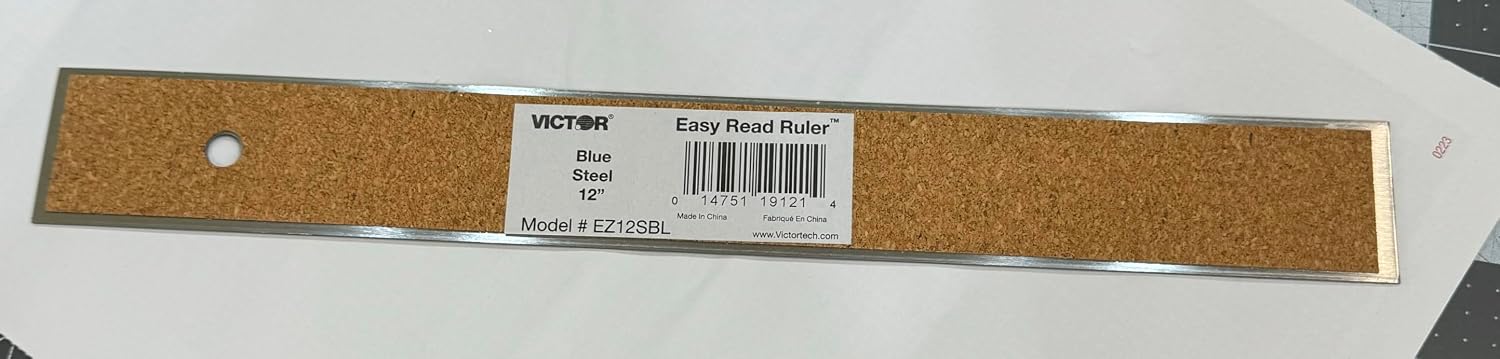
Victor 12-Inch Stainless Steel Ruler for shallow lips and small offsets
- Use it for: baseboard depth, shelf lips, outlet offsets, and short clearances.
- Why it belongs: a rigid edge is easier to slide into a shallow space than a flexible tape.
- Watch: do not use the ruler alone for a deep cabinet or an opening that is not square.
Fits if / skip if
| Storage type | Fits if | Skip if |
|---|---|---|
| Slim rolling cart | The smallest gap reading exceeds the cart width and the full pull path stays clear. | The back gap narrows or the handle hits a wall, cabinet, or appliance. |
| Freestanding shelf | Depth clears the baseboard and the shelf does not reduce a walkway below a comfortable width. | You can only measure the opening, not the wall obstruction behind it. |
| Cabinet or drawer unit | The carcass fits and the doors or drawers can open without hitting nearby objects. | The front opening is wide enough but the handles need more room than the gap provides. |
| Under-bed or low bin | Height is measured at the lowest point and the bin can be pulled out far enough to use. | The bed frame, rug, or floor transition blocks the wheels or lid. |
Common measurement mistakes
- Measuring only once, at the easiest point to reach.
- Using the room's nominal size instead of the usable opening after trim, pipes, outlets, or baseboards.
- Comparing your width with a product's depth because the listing presents dimensions in a different order.
- Ignoring wheels, feet, handles, rails, lid swing, or a drawer's full extension.
- Buying to the exact number with no tolerance for uneven walls, flooring, or measurement error.
- Forgetting the delivery path: a product may fit its final gap but not the doorway, stairs, or turn into the room.
FAQ
How much smaller should storage be than a narrow gap?
Leave a practical margin instead of shopping to the exact measurement. The right margin depends on whether the item is fixed, rolling, or opened, but a tight gap should not be treated as a zero-clearance fit.
Should I measure the front or back of a narrow gap?
Measure both, plus the middle when possible. Use the smallest reading because walls, cabinets, and appliances often taper or sit slightly out of square.
How do I measure a gap beside a fridge or cabinet?
Measure the front entry, the back of the gap, the depth to the wall, and the path the product needs when pulled out. Include handles, baseboards, and the appliance clearance required by its manufacturer.
Does painter's tape really help measure furniture?
Yes. A taped footprint makes width, depth, door swing, drawer travel, and walkway loss visible before you bring the product home. Remove the tape carefully and test delicate surfaces first.